
Your heating bill rises every winter, and you know that your home deserves renovations. The MaPrimeRénov’ scheme exists precisely to finance part of these renovations. The principle is simple: the State covers a fraction of the cost of work that improves the energy performance of your home. However, you must choose the right renovations, in the right order, for the impact on your consumption to be real and lasting.
Why a single renovation gesture is not always enough
Many homeowners start by replacing their boiler. It’s logical: it’s the equipment that’s visible, the one that breaks down. The problem is that a high-performance heating system installed in a poorly insulated home continues to heat the outside.
Let’s take a concrete example. You install an air-water heat pump in a house with uninsulated attics. The pump works well, but it runs longer than expected to maintain the temperature. Your bill decreases a little, but not as much as hoped.
The supported pathway of MaPrimeRénov’ requires a gain of at least two classes on the energy performance diagnosis (DPE). This requirement encourages the combination of several actions: insulation, ventilation, heating replacement. It may seem restrictive on paper, but it produces measurable results on the bill. Homeowners who check if they are eligible for ma prime renov often discover that the supported pathway opens up broader financing than just replacing a piece of equipment.
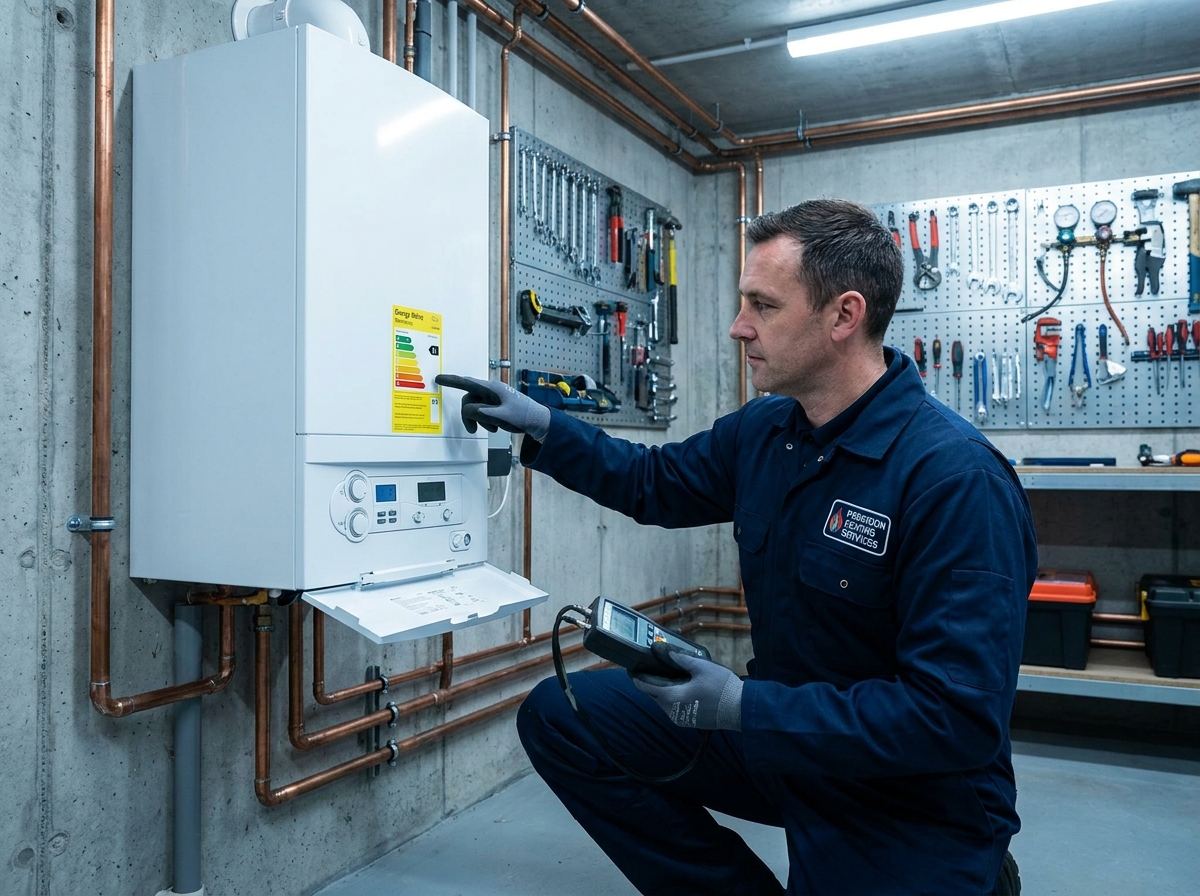
Heating eligible for MaPrimeRénov’: what is funded and what is not
Not all heating systems qualify for assistance. The action-based pathway finances equipment that operates on renewable energy. Here are the main ones:
- The air-water or geothermal heat pump, which captures heat from the air or ground to heat the water in the radiator circuit or underfloor heating.
- The thermodynamic or solar water heater, for the production of domestic hot water.
- Wood or pellet stoves, provided they meet the efficiency criteria set by the scheme.
Beware of a common pitfall: the air-air heat pump (reversible air conditioning) is excluded from the action-based pathway. However, it can be included in a bundle of works funded by the supported pathway, provided it is part of a larger renovation.
Another point to remember: wall insulation and biomass boilers are no longer covered by the action-based pathway. The scope of eligible works has been tightened.
Combining aids to reduce the remaining cost of heating
MaPrimeRénov’ is not the only assistance available. Combining it with other schemes significantly reduces the amount remaining to be paid. Here are the most common complementary levers:
- Energy savings certificates (CEE), also known as “energy bonuses,” provided by energy suppliers. They apply to most energy renovation actions.
- The zero-interest eco-loan (éco-PTZ), an interest-free loan that finances the remaining cost after deducting aids.
- The reduced VAT rate of 5.5% on energy renovation works, applied directly to the craftsman’s invoice.
- Local aids offered by certain local authorities, varying by region.
The supported pathway of MaPrimeRénov’ can finance up to 80% of a work ceiling. By adding the CEE and an eco-PTZ, some low-income households achieve a very low remaining cost. But beware: the application must be submitted before the work begins, and quotes signed after the grant application.
My Renov’ Accompanier: a necessary step that changes the game
You may have heard of My Renov’ Accompanier. In the supported pathway, this professional accredited by Anah is mandatory. Their role: to conduct an energy audit, define a coherent work plan, and verify that the DPE class gain will be achieved.
This is not just a simple administrative formality. The accompanier sequences the work in a logical order. For example, insulate first, then adjust the power of the new heating system to the actual needs of the insulated home. A properly sized heating system consumes less than an oversized device that operates in fits and starts.
The accompanier also checks that the chosen craftsmen are RGE certified (recognized guarantor of the environment), a mandatory condition to receive MaPrimeRénov’.
Coordinating your energy renovation project without managing everything alone
Putting together an energy renovation file involves juggling between the audit, quotes, aid applications, choosing craftsmen, and monitoring the site. For homeowners of F or G rated properties, the administrative burden can be discouraging.
This is the type of situation where a project accompanier makes perfect sense. homji, created by Crédit Mutuel Alliance Fédérale, offers free support covering the entire process: simulation of mobilizable aids, connecting with certified RGE craftsmen, managing administrative procedures, and financing solutions through Crédit Mutuel and CIC networks.
homji does not carry out the work but coordinates the project from the initial estimate to the completion of the site, with accredited accompaniers from My Renov’ Accompanier by Anah. The advance of aids at no cost to the individual is part of the offer.
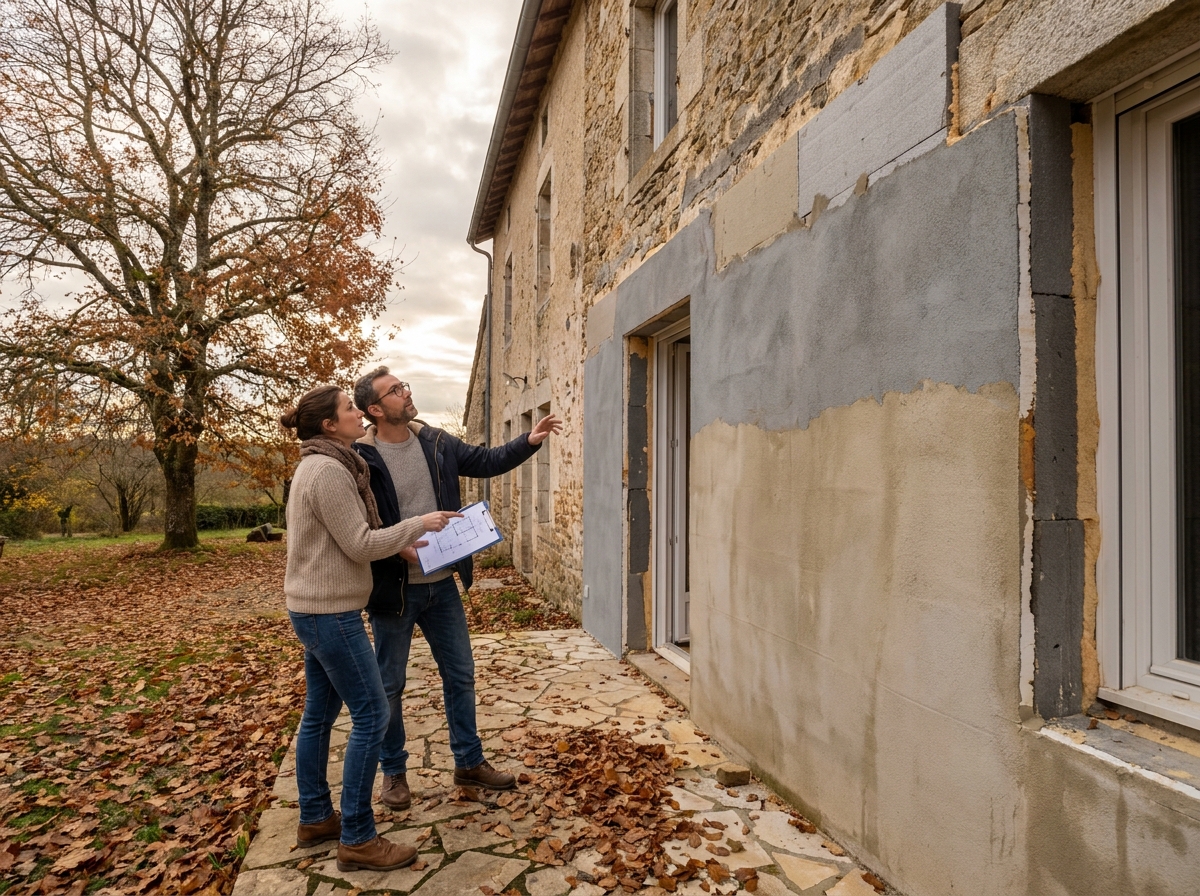
Energy renovation produces its best results when the work is thought out together, not gesture by gesture as breakdowns occur. A well-insulated home with appropriate heating consumes structurally less, regardless of the evolution of energy prices. The first step remains to have an energy audit conducted to know exactly where the heat is going and which works will have the most impact on your bill.