
VO2 max measures the maximum volume of oxygen that the body can consume per minute and per kilogram of body weight during intense effort. This indicator of cardiorespiratory capacity is of interest to runners, cyclists, and triathletes alike. Improving VO2 max means pushing the threshold at which the body can no longer supply enough oxygen to the muscles, resulting in increased endurance and better running speed.
Block training: concentrating intensive load over several days
Most mainstream programs recommend one to two intense sessions per week, distributed linearly. A different approach, block training, involves chaining two or three consecutive days of high-intensity intervals, followed by a prolonged recovery block.
A study published in Medicine & Science in Sports & Exercise (Bakken et al., 2024) shows that a protocol of three consecutive days of high-intensity intervals, repeated several times in a cycle, allows for a more significant improvement in VO2 max over a few weeks than a traditional distribution. The principle relies on the accumulation of concentrated metabolic stress, which triggers deeper cardiovascular and mitochondrial adaptations.
This type of concentrated periodization is particularly suitable for athletes who already have several months of regular training. Applying block training without a solid aerobic base exposes one to the risk of overtraining. Field reports vary on the optimal duration of the subsequent recovery block, depending on age, level, and discipline. Several resources also detail other endurance techniques on Carnet de Sportive to complement this approach.
Inspiratory muscle training and VO2 max
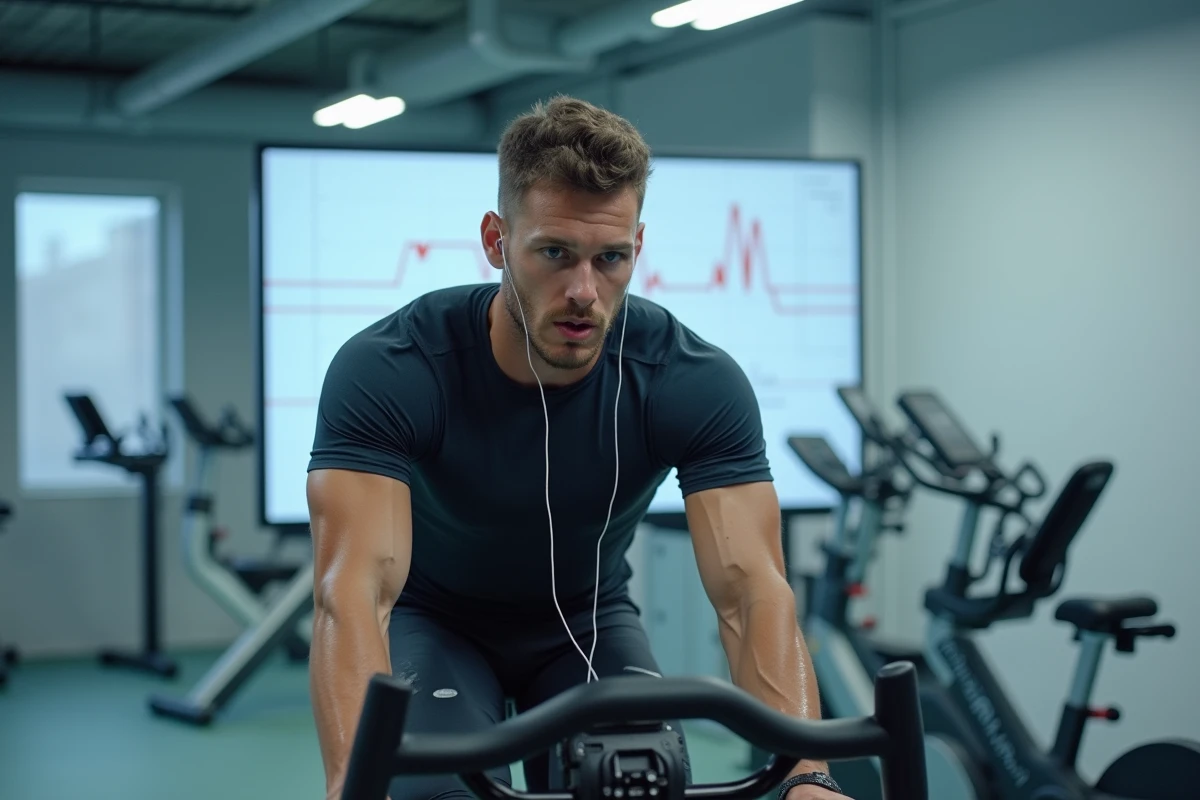
A rarely mentioned lever in VO2 max guides concerns the specific training of respiratory muscles. The inspiratory muscles (diaphragm, external intercostals) consume oxygen themselves during effort. When their efficiency improves, a larger fraction of the available oxygen is redistributed to the locomotor muscles.
A meta-analysis published in Sports Medicine in 2023 reports that training the inspiratory muscles over four to six weeks, practiced five to seven days a week, significantly improves VO2 max and time to exhaustion in already trained runners and cyclists. Devices like PowerBreathe allow for calibrated resistance during inspiration.
The available data do not allow for concluding that this method works as well for beginners, whose limiting factor is often cardiac capacity rather than respiratory mechanics. For seasoned athletes who plateau despite a high training volume, respiratory muscle training represents an interesting complement to explore.
Altitude training and hypoxic exposure
Exposure to altitude reduces the partial pressure of oxygen in the air, prompting the body to produce more red blood cells to compensate. This adaptation increases the capacity for oxygen transport to the muscles and, consequently, the VO2 max measured upon returning to lower altitudes.
Actual altitude training remains demanding. Intermittent hypoxia training protocols, achievable with a mask or in a hypoxic chamber, allow for partial simulation of these conditions. However, the response to hypoxia varies greatly from individual to individual, making the results less predictable than those from traditional interval training.
- Actual altitude (stay of several weeks above 1,800 m): profound hematological adaptations, but heavy logistics and risk of power loss during training.
- Intermittent hypoxia indoors: more accessible sessions, but the gains in VO2 max remain lower than those from a prolonged stay at altitude.
- “Live high, train low” protocol: considered the most effective compromise by scientific literature, but reserved for athletes with the appropriate infrastructure.
Recovery and VMA: two variables often miscalibrated
Increasing VO2 max does not solely depend on the training stimulus. Recovery determines the body’s ability to convert this stimulus into actual adaptation. Insufficient sleep or chronic stress raises cortisol, slows protein synthesis, and delays gains in aerobic capacity.
Recovery is not the absence of training but an active process. Rest days can include very low-intensity activity (walking, light cycling) to maintain blood flow without creating additional load. Wearable devices that measure heart rate variability (HRV) provide a useful indicator for adjusting daily load.
Maximal aerobic speed (VMA) is the other variable to calibrate. It corresponds to the running speed at which VO2 max is reached. Working at too low an intensity does not sufficiently engage the cardiovascular system, while effort above VMA shifts into anaerobic metabolism and reduces the time spent in the target zone.
- A field test like the Cooper test (distance covered in twelve minutes) or a progressive track test allows for estimating VMA without laboratory equipment.
- The most effective interval sessions for VO2 max are between 90 and 105% of VMA, with effort intervals of two to five minutes.
- Reassessing VMA every six to eight weeks ensures that session intensity remains appropriate to the progress made.
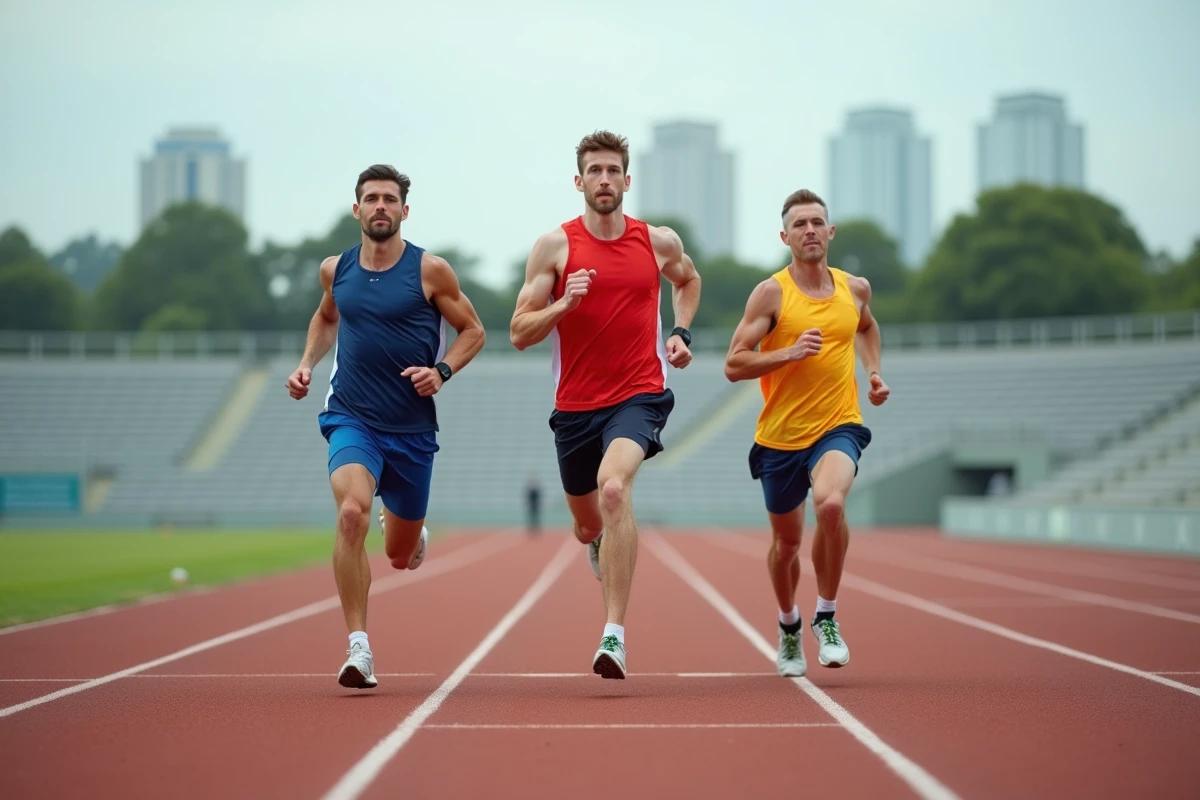
Progress in VO2 max slows with training level. A beginner may observe rapid gains within a few weeks of regular intervals, while a seasoned athlete will need to combine several levers (block training, respiratory work, fine management of recovery) to gain a few additional points. Genetic potential sets a ceiling that training cannot exceed, but most amateur athletes are far from having reached it.