
Doro phones are equipping a growing number of seniors in France, but the choice of SIM card that accompanies them raises technical questions that are often underestimated. Format size, supported network generation, operator locking: each parameter affects the proper functioning of the device. With the planned shutdown of 2G and 3G networks by several French operators, this choice has become more restrictive than it was two years ago.
Shutdown of 2G/3G networks and consequences for Doro phones
The starting point, even before discussing format or operator, is the network generation supported by the specific Doro model. Some models like the Doro 1380 are limited to 2G. However, Orange and Bouygues Telecom have begun the gradual shutdown of their 2G and 3G networks by 2025-2026.
A Doro restricted to 2G will still function for a few months in certain areas, but will gradually lose the ability to make or receive calls depending on the operator and geographic location. Choosing a SIM card compatible with a Doro phone therefore requires first checking if the device supports 4G and VoLTE technology (voice calls over the 4G network).
Without VoLTE, even a 4G SIM card will not allow calls once the old networks are shut down. The technical specifications of the model, available on the Doro website or in the manual, indicate the supported network generation. This is the first piece of information to check.

SIM card format according to Doro models: micro or nano
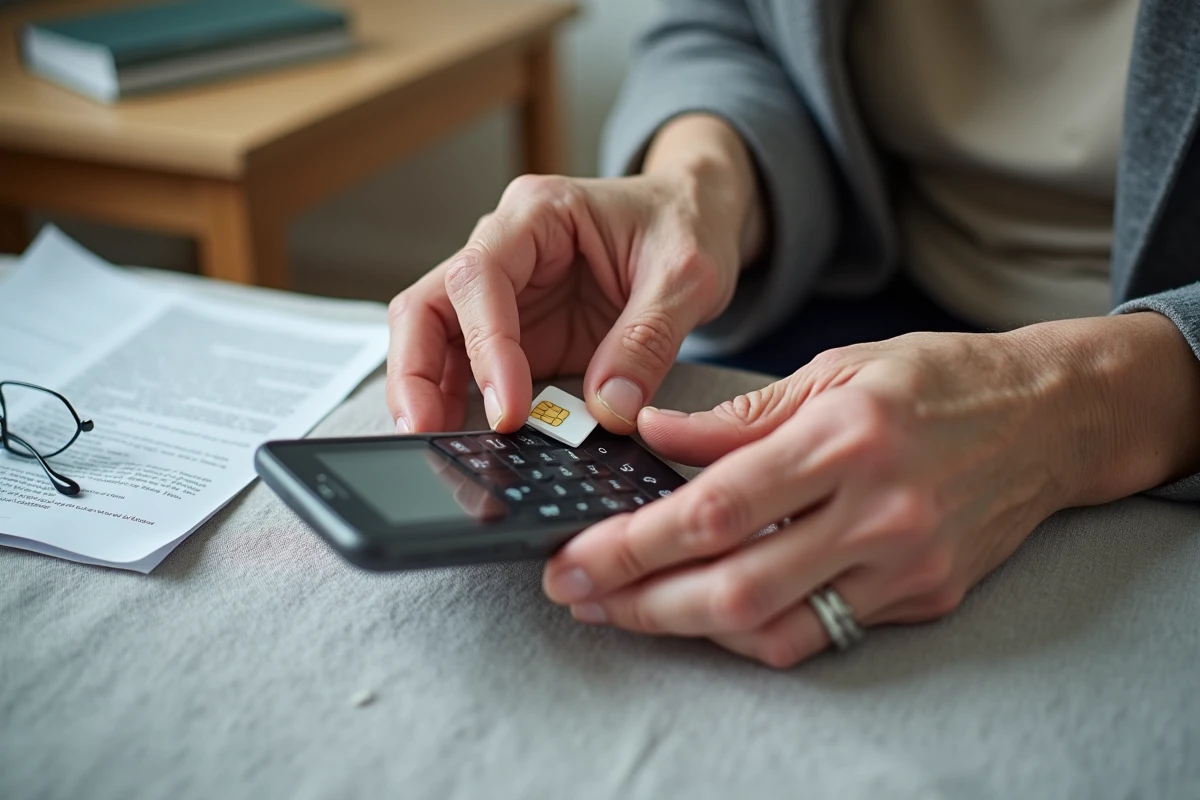
Doro phones do not all use the same SIM card format. Button models (classic mobile phones) most often work with a microSIM. Newer Doro smartphones (8xxx series and some 7xxx) require a nanoSIM, the smallest format currently standard on most smartphones.
The so-called “triple cut” SIM cards sold by most operators theoretically adapt to the three formats (standard, micro, nano). In practice, field feedback indicates that the cut does not always fit perfectly in the SIM tray of some flip Doro phones or those with large buttons. A poor positioning can prevent the device from detecting the card.
Checking the exact format is done in the model’s manual or on the Doro product sheet. In case of doubt, it is better to ask the operator directly for a card in the correct format rather than forcing an unsuitable cut.
Operator locking on Doro packs: a common trap
Several recent Doro models, particularly in the 7xxx series and some smartphones, are sold in operator packs (Orange, Sosh, Bouygues Telecom). These devices are then simlocked or partially locked, which restricts use to the SIM card of the selling operator.
In practice, inserting a SIM card from another operator into a Doro purchased in a pack may trigger an error message or block access to the network. Unlocking is possible, but it requires an official request to the customer service of the original operator. The timeframes vary, and the procedure is not always simple for an elderly person alone.
Before purchasing a SIM card from an operator different from that of the pack, it is essential to check the locking status of the device. A Doro bought unlocked (not in an operator pack) accepts any SIM card of the correct format, without restriction.
What to check before changing operators
- The locking status of the device: a Doro purchased in a pack is likely simlocked unless unlocking has been requested
- Network compatibility: if the Doro only supports 2G, changing operators will not solve the coverage issue in the medium term
- The configuration of voicemail and data APN, which may require manual setup depending on the chosen operator
Senior plans and low data SIM cards: what operators offer
Several French operators and MVNOs market plans aimed at seniors, with unlimited calls and SMS but a very limited data allowance, or even a complete block on internet connection. This type of plan meets the common usage of Doro phone users: making calls, sending SMS, without the risk of extra costs related to web browsing.
The choice of plan also determines the SIM card provided. Some very low-cost plans do not include VoLTE, which brings us back to the issue of the shutdown of 2G/3G networks mentioned earlier. A VoLTE-compatible plan ensures the continuity of voice calls even after the old networks are shut down.
Concrete criteria for choosing the right plan
- Check that the plan activates VoLTE, and not just 4G for data
- Prefer a data block option if the senior does not use the internet, to avoid any unexpected billing
- Ensure that the operator adequately covers the residential area in 4G by consulting the official coverage map from ARCEP
- Confirm that the size of the provided SIM card matches the Doro model used
The available data does not allow for a universal designation of one operator as better than another: local coverage and the Doro model owned remain the two determining variables.
The choice of a SIM card for a Doro phone hinges on three precise checks: the network generation supported by the model, the physical format of the card, and the locking status of the device. Neglecting any of these steps exposes one to a mute or limited device, sometimes with no simple recourse for a senior user.