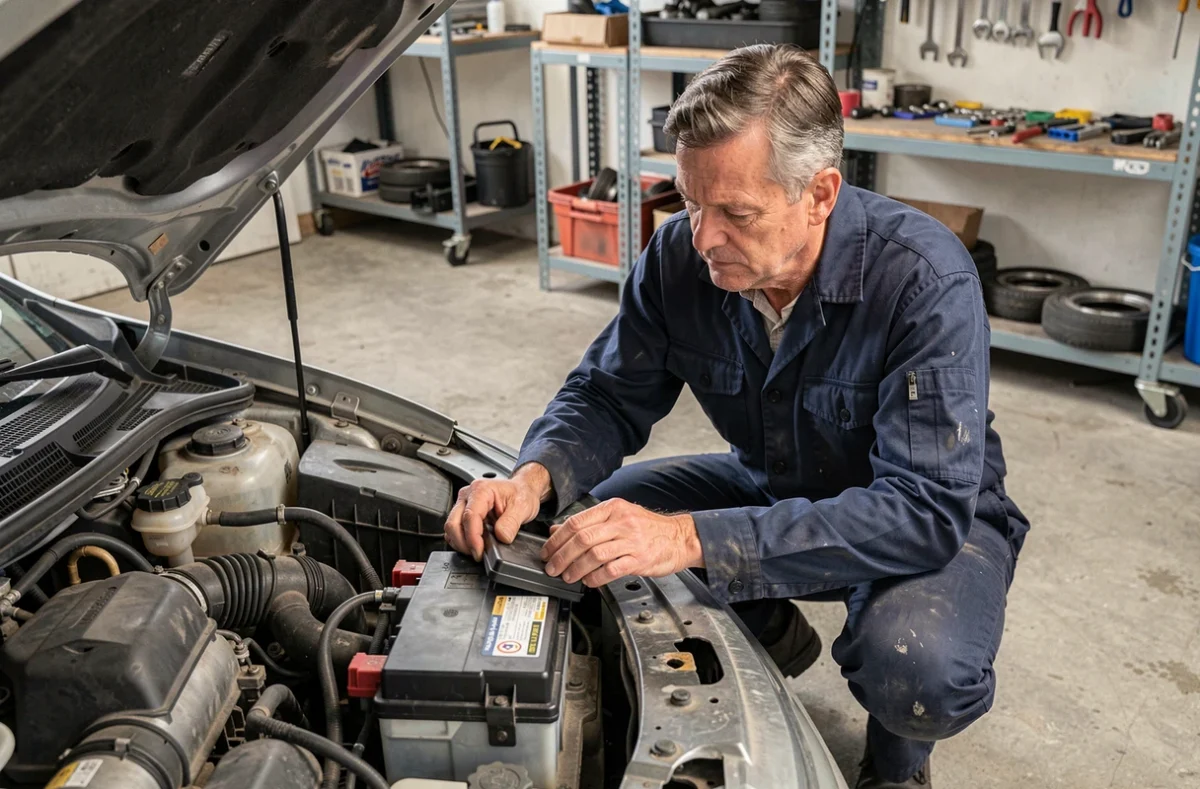
On the Mégane III, the engine compartment contains several separate fuse boxes, not one central unit. There is a main engine fuse box, a second block integrated into the protection and switching unit (UPC), and power fuses near the battery. Checking only the first box you see can easily lead you to overlook the circuit causing the problem.
Mégane 3 engine fuses: locating the boxes under the bonnet by engine type
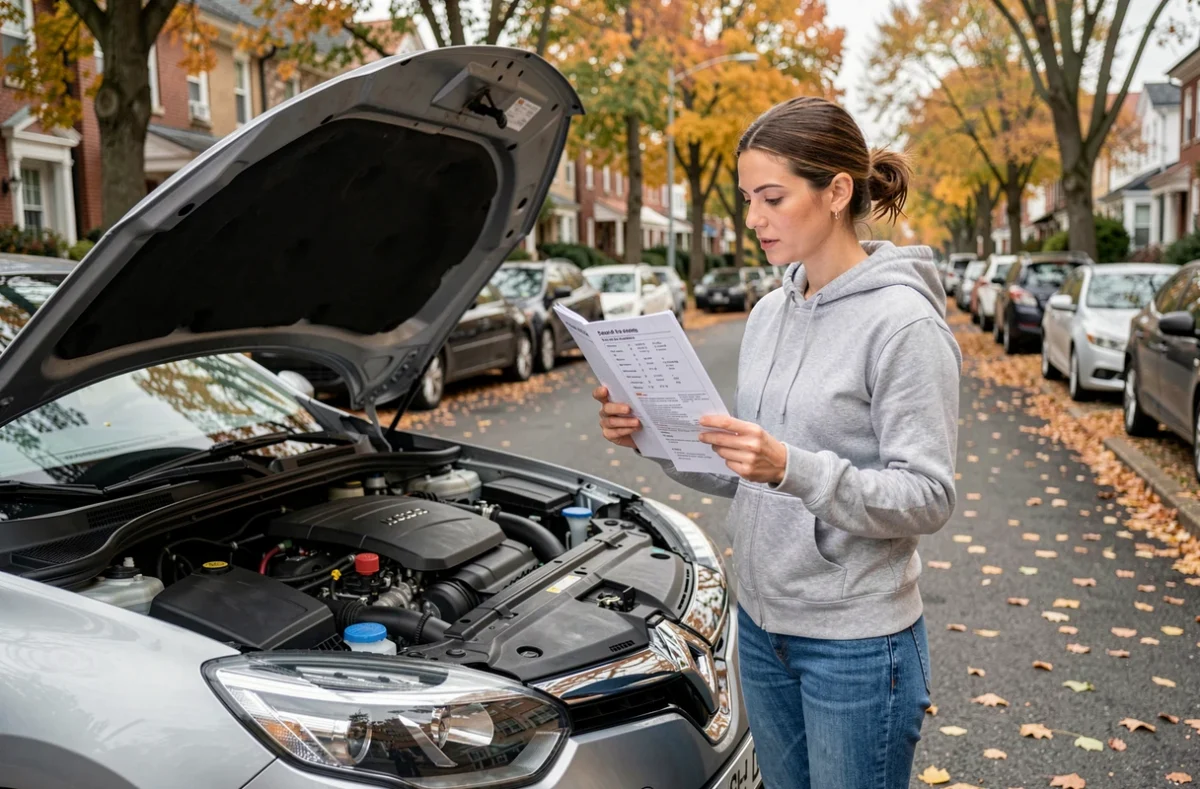
Fuse and relay assignments in the engine compartment vary depending on trim level, model year and engine type. A generic diagram found online may not match your vehicle. Before carrying out any work, check the chassis code (B95, D95, K95 or E95) on the manufacturer’s plate and compare it with Renault’s technical documentation.
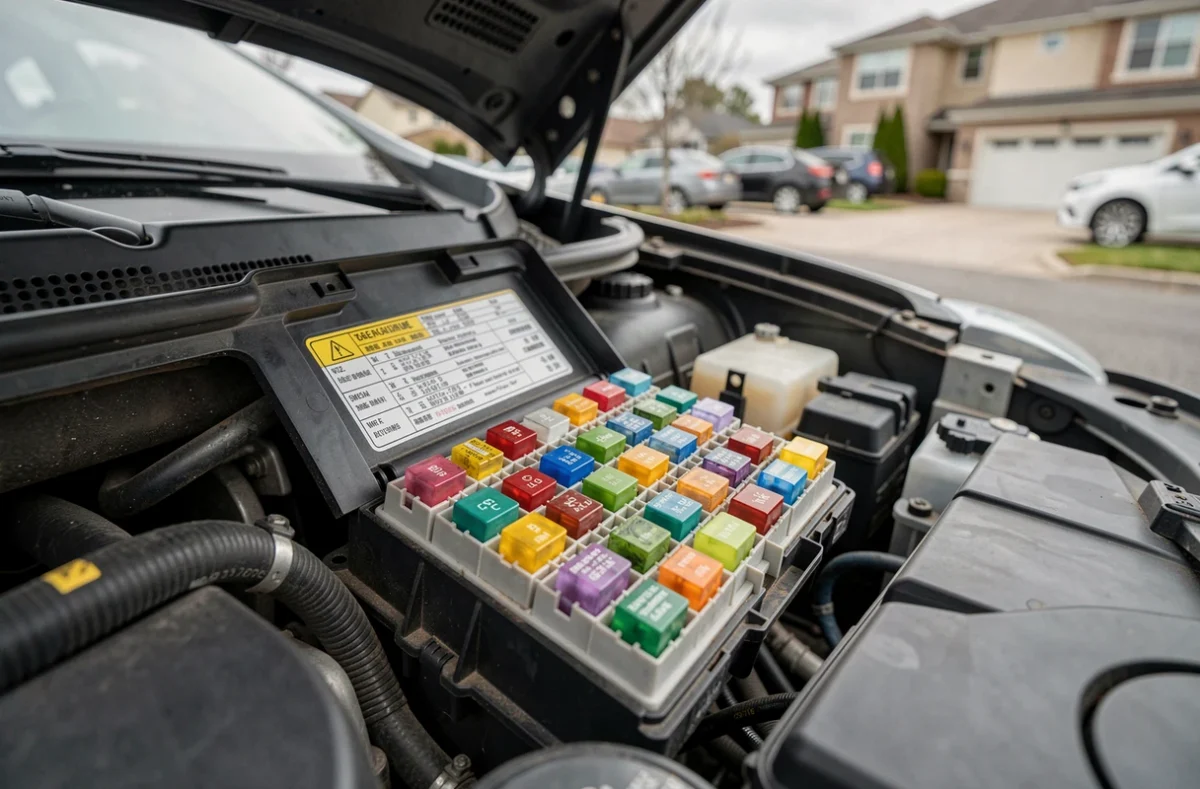
The main engine fuse box is on the left-hand side, behind the headlight. It contains high-current fuses for the injection system, glow plugs (on the 1.5 dCi diesel), cooling fan and fuel pump. You may need to remove a clip-on plastic cover to access it.
The second block, housed beneath the protection and switching unit, protects auxiliary circuits (sensors and communication between control units). Accessing it requires partially removing the UPC cover, which makes the job more complicated. To avoid guesswork, consult a Mégane 3 under-bonnet fuse diagram that matches your engine type.
In some official manuals, Renault advises against replacing engine-compartment fuses yourself because they are difficult to access, and recommends having the work carried out by an authorised representative. Guides that describe the job as a simple matter of pulling out a fuse overlook this limitation.
Diagnosing a blown engine fuse on the Mégane III: method and pitfalls
A blown fuse can be identified visually (a broken filament or burn marks on the translucent casing) or with a multimeter set to continuity mode. A visual check alone is not always enough: some blade fuses have an internal break that is invisible to the naked eye. Always test with a multimeter rather than relying on the transparency of the casing.
Before removing a fuse, switch off the ignition and wait about 30 seconds. Several control units (engine ECU, ABS module and power steering) remain powered for a short time after the ignition is switched off. Working too soon can cause a communication fault between control units, adding a spurious error code to the original problem.
Fuses to check first when the engine has a fault
- ECU power supply fuse: protects the injection control unit. If it blows, the engine will not start at all, and the glow plug warning light will not come on in diesel models.
- Fuel pump fuse: on petrol models, a blown fuse prevents the fuel system from priming. The starter turns, but the engine does not start.
- Glow plug relay fuse (diesel): if the glow plugs do not work in cold weather, starting may be difficult or even impossible below freezing.
- Cooling fan fuses: if these blow, the engine can still start, but it may overheat quickly in urban traffic.
Mégane 3 fuse keeps blowing: circuit fault or simple wear?
A fuse that blows again after replacement points to an ongoing fault in the circuit, not a faulty fuse. Replacing the fuse without looking for the cause only treats the symptom. We find that this mistake accounts for a significant proportion of unnecessarily prolonged workshop diagnostics.
A direct short circuit (a bare wire touching the bodywork, a corroded connector or a shorted component) blows the fuse as soon as the ignition is switched back on. An intermittent overload (a failing fan motor or a worn fuel pump) blows it after a few minutes or kilometres. This distinction helps guide the diagnosis.
When to stop testing and move on to electronic diagnostics
If the same fuse blows twice in a row, do not try replacing it a third time. Two consecutive blown fuses mean the wiring harness and the component powered by that circuit need to be checked. Renault’s technical documentation calls for diagnostic tools (such as CLIP or an equivalent) to identify communication faults between control units—something that goes beyond a simple visual fuse check.
Start by visually inspecting the wiring harness for the circuit in question: signs of rubbing against sheet metal, a split sheath or a blackened connector. On the Mégane III, the wiring route between the bulkhead and the engine compartment is a known chafing point.
High-current fuses near the battery: the overlooked fuse box on the Mégane 3
The third fuse location, right next to the battery, protects high-current circuits such as the starter, alternator and electric power steering. These high-capacity cartridge fuses look different from standard blade fuses and may require a wrench to remove.
This fuse block is rarely mentioned in online tutorials, which tend to focus on the main engine fuse box. A power steering failure or a no-start issue despite a fully charged battery should prompt you to check these high-current fuses.
Bear in mind that replacing a high-current fuse with one of a higher rating (for example, fitting a fuse with a higher amperage rating) removes the circuit’s protection and can damage the wiring harness or downstream component. Always use the rating specified on the original fuse.
Electrical engine diagnostics on the Mégane III involve more than opening a cover and replacing a blown fuse. The presence of three separate fuse locations, variations by engine type and equipment, and the possibility of an underlying circuit fault causing repeated fuse failures all call for a systematic approach. After two unsuccessful replacements, a diagnostic tool is the only reliable way to trace the problem to its root cause.