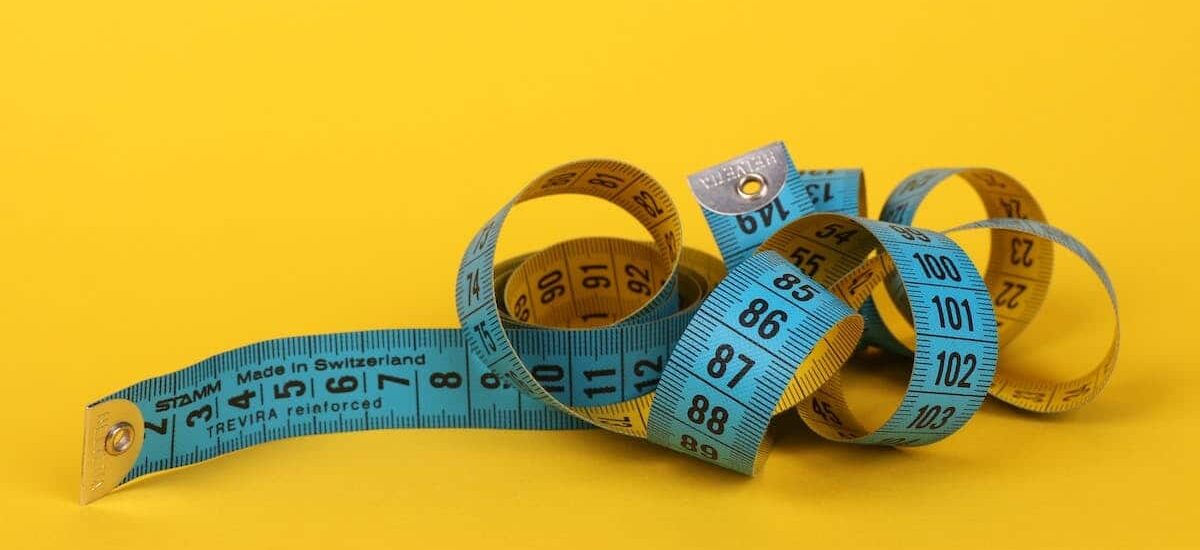
Are you considering renovating your home or simply buying a new rug? In either case, determining the space you have is crucial. Whether you are a construction professional or a DIY enthusiast, the fundamental skill of calculating square footage is essential. It is a simple task that requires little more than a measuring tape and basic math skills. Accuracy is key to avoiding costly mistakes. So, how do you measure a room accurately? This question deserves exploration.
Measuring a Room: The Basics of Area
When it comes to ‘how to measure a room‘, it is essential to be equipped with the right tools. First and foremost, a measuring tape is indispensable: its use allows you to take the dimensions • length, width, and height • of the room accurately. Whether it is metal or fabric, make sure it is long enough to cover the largest lengths you will need to measure.
However, answering the question ‘how to measure a room‘ is not limited to just choosing measuring instruments. A notebook and pen are equally important: they are used to carefully note each measurement collected during the process. These two accessories prevent any confusion that could arise from a memory error.
For those still wondering ‘how to measure a room‘, a laser distance measurer can also be helpful. This innovative tool not only offers millimeter accuracy but also ensures a significant time savings for larger spaces to determine how to measure a room.
Another crucial aspect in answering ‘how to measure a room’ concerns the appropriate lighting you have when taking measurements. You need to ensure that you can read clearly on your instrument without ambiguities or potential errors.
Finally, regarding ‘how to measure a room’ accurately, let’s not forget our essential ally: the calculator! It will be your main support when it comes time to make those final conversions to the desired unit • for example, converting from square meters to square feet.
Now that you have all these elements in hand regarding ‘how to measure a room’, gather your tools! Measure each dimension (length, width, height) carefully. Note all these data precisely and then use them to correctly determine the total area expressed in square foot(s).

Essential Tools for Measuring a Room
In this article, we will reveal the essential steps to calculate the area of a room in square feet. Follow these instructions carefully, and you will be able to measure any space accurately.
The first step is to take the measurements of the length and width of the room using a measuring tape. Ensure that the tape is taut when taking measurements to avoid any distortion. Note the obtained dimensions; you must be rigorous in this task.
Multiply the length by the width to obtain the area in metric units (square meters). For example, if your room is 5 meters long and 4 meters wide, then the area will equal 20 square meters.
Now comes the crucial moment when we convert the metric unit to square feet. To do this, simply divide the area in square meters by a constant factor that corresponds to approximately 0.092903. Referring back to our previous example, you will obtain an area of about 215 square feet.
Remember that some countries, like the United States, primarily use the imperial system where areas are expressed in square feet rather than square meters.
A practical tip is to divide the room into smaller zones and calculate their area individually. Then simply add them up to obtain the total area of the room. This method can be particularly useful when dealing with irregular or complex spaces.
Measuring a room accurately requires a methodical process. By following these simple yet effective steps, you will be able to easily calculate the area of a room in square feet. Whether for real estate reasons or simply out of personal curiosity, feel free to apply these practical tips during your next measurements.
Calculating Area in Square Feet: Key Steps
In this section, we will share some tips for a precise and rigorous measurement of a room’s area in square feet. Follow these wise tips to achieve reliable results.
Make sure the floor is perfectly flat before taking measurements. Floor irregularities can distort measurements and lead to inaccurate area estimates. Use a level to check the floor’s horizontal alignment and correct it if necessary before starting your measurements.
When taking dimensions, be sure to account for obstacles present in the room, such as pillars or columns. If these elements are not included in your calculation, you will obtain an inaccurate estimate of the actual area.
Be cautious of non-usable spaces like built-in closets or corners that are too narrow to be utilized. Exclude these inaccessible areas when calculating to have a precise measurement corresponding to the actual usable space available.
Another tip is to visually divide the room into rectangles or simple geometric shapes that would be easier to measure individually. By then adding all these correctly calculated partial areas, you will easily obtain the total area without significant risk of error.
If you encounter difficulties with certain technical aspects related to the measurement process, such as the exact positioning of the measuring tape or the use of conversions, do not hesitate to call in a professional. Real estate experts or surveyors can help you measure the area of your room in square feet accurately.
For even more precise and rigorous measurement, it is recommended to take multiple measurements and calculate the average of the results obtained. This will help eliminate any one-time errors or inaccuracies related to a single measurement.
Measuring the area of a room in square feet accurately requires care and rigor. By following these simple yet essential tips, you will be able to obtain reliable estimates that accurately reflect the actual space available. Feel free to apply these tips during your next measurements to have a clear and precise view of your interior spaces’ dimensions.
Accurate and Rigorous Measurement: Essential Tips
In the quest for precise measurements, it is important to consider these architectural specifics to obtain a precise and faithful estimate of the total area.
Inaccuracy can also stem from a lack of patience and the desire to rush through the measurement process. Take the necessary time to perform your measurements meticulously, ensuring that you align your measuring tape properly with the edges of walls or other strategic points.
Beware of excessive approximations and rounding. Although this may seem trivial, each small accumulated error can lead to a notable difference between the actual measurement and the initially estimated one. Therefore, prioritize precise calculations and avoid approximations as much as possible.
Measuring the area of a room in square feet accurately requires meticulous attention and a rigorous approach. By avoiding these common mistakes, you will be able to produce reliable results that faithfully reflect the actual space you have. Take the necessary time to perform your measurements under optimal conditions, and do not hesitate to call in a professional if you encounter difficulties or uncertainties in this crucial process.
Avoiding Common Mistakes When Measuring a Room
Measuring a room accurately has many undeniable advantages. It will allow you to have an exact knowledge of the space you have. Whether for practical or aesthetic reasons, you need to know the actual area in order to make informed decisions about the layout and decoration of your interior.
By having precise measurements in hand, you will be able to accurately assess the available dimensions for each piece of furniture, decorative object, or appliance you wish to integrate into that specific space. This will avoid unpleasant surprises when it comes to installing your belongings and will make the process much smoother and more enjoyable.
Measuring a room accurately can also have a significant financial impact. If you are considering renovation or expansion work, you need reliable figures to obtain accurate quotes and avoid any unexpected budget overruns. An error in measurement could lead to considerable additional costs if materials are ordered in inadequate quantities.
If you are a homeowner and are considering selling your property, providing potential buyers with an accurate measurement of each room can play a key role in their final decision-making. Interested buyers will be reassured by the fact that all information about the property’s size has been carefully verified.
Measuring a room accurately can also have legal and administrative implications. For example, when signing a lease agreement, you must provide the exact dimensions so that the rent can be correctly established based on the actual area. Similarly, when it comes to establishing plans or building permits, precise measurement will be essential to comply with all applicable regulations.
Measuring a room accurately has several major advantages both practically and financially. It will not only optimize the available space but also avoid any future problems related to errors in estimates. So take the necessary time to perform your measurements with rigor and care to maximize all these benefits and ensure optimal use of your interior space.
Benefits of Accurate Measurement for a Room
In this quest for precision, there are several methods to measure a room reliably. One of them is the use of a measuring tape, an indispensable tool for any DIY enthusiast or interior decorator. To start, take the measurements of the walls in length and width, making sure to note each figure accurately.
Once you have all the necessary dimensions at hand, it is time to perform a few simple calculations to obtain the total area of your room. Multiply the length by the width to get the total number of square feet. For example, if your room measures 10 feet by 12 feet, you will obtain a total area of 120 square feet.
You should note that some rooms may have more complex shapes, such as rounded corners or built-in closets. In these cases, it may be helpful to use additional techniques, such as dividing the room into different rectangular sections and then adding their individual areas to obtain a more precise overall area.
For those who do not feel comfortable with manual calculations or who are looking for a quicker and more convenient option, there are now mobile applications specifically designed to easily measure a room accurately. These applications typically use augmented reality and allow users to sweep their phone around the perimeter of a room so that it can be instantly scanned and its area calculated automatically.
Whichever method you choose, you must take the necessary time to measure your room accurately. A small error can have a significant impact on future layouts or work you plan to undertake. Do not hesitate to check your measurements multiple times to avoid any confusion and inconsistency in the figures obtained.
Knowing how to measure a room accurately is a fundamental skill that can be useful in many different situations. Whether for practical, financial, or administrative reasons, having an exact area will allow you to make informed decisions and avoid any potential problems in the future. So grab your measuring tape (or use an app) and take the necessary time to obtain reliable figures to maximize all the benefits offered by this precise knowledge of your interior space.